
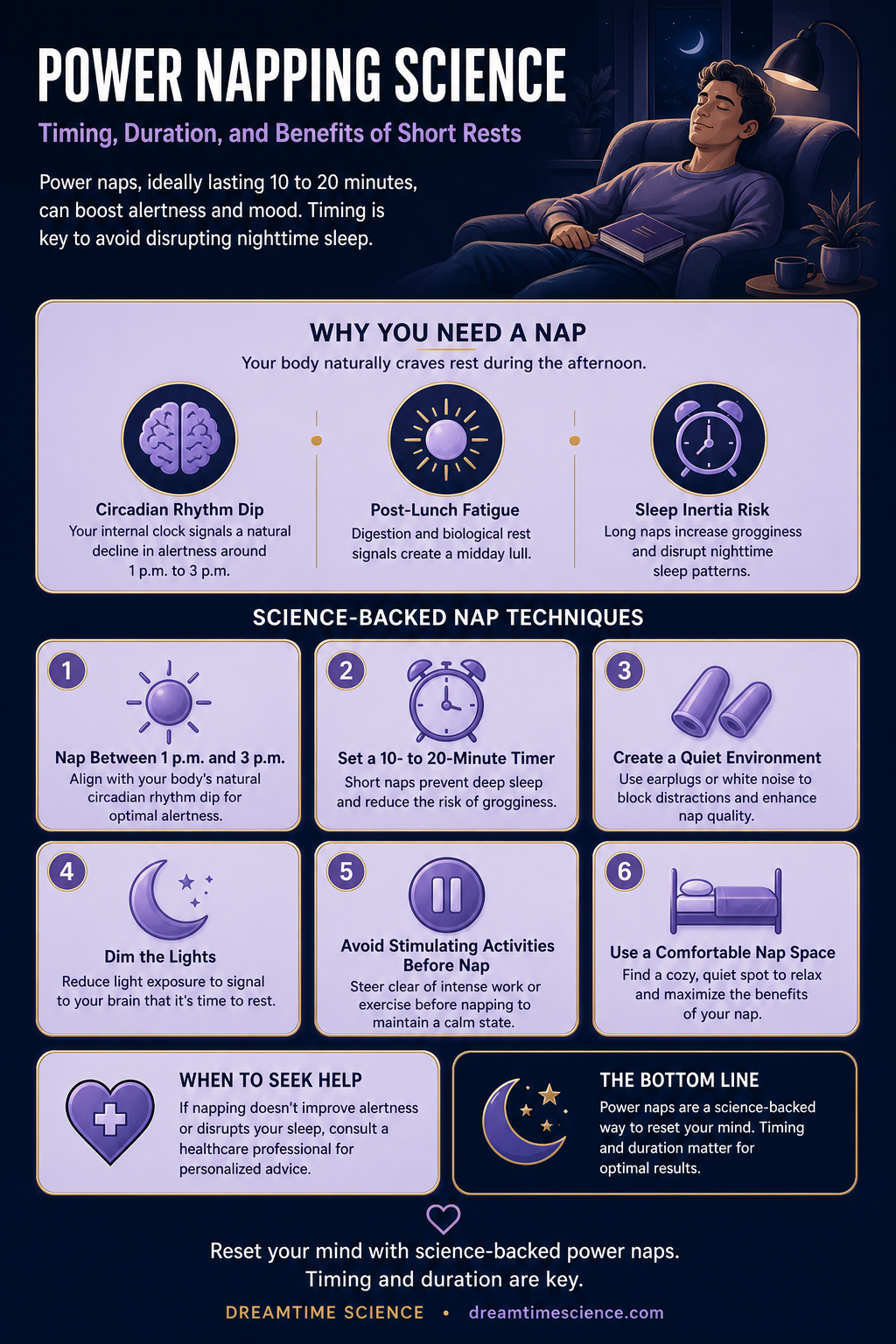
The short answer: Power naps, ideally lasting 10 to 20 minutes, can provide significant benefits like boosted alertness and improved mood. Timing is key; the early afternoon, between 1 p.m. and 3 p.m., aligns with the body's natural circadian rhythm dip, avoiding interference with nighttime sleep. A 1995 study showed that even a 10-minute nap improves alertness and cognitive performance.
Power naps, lasting between 10 and 20 minutes, can significantly improve alertness, cognitive function, and mood. Strategic timing, typically in the early afternoon when the circadian rhythm naturally dips, is crucial to avoid disrupting nighttime sleep.
Naps can be a highly effective tool for counteracting daytime fatigue, but maximizing their benefits depends on understanding the underlying physiology and optimizing nap characteristics. While often viewed as a luxury, a brief period of sleep can offer measurable cognitive and physical improvements for many individuals.
Key takeaways
- Power naps align with the body’s natural circadian rhythm when taken between 1 p.m. and 3 p.m.
- Naps lasting 10 to 20 minutes are ideal for avoiding sleep inertia and maximizing alertness.
- Short naps can improve vigilance, reaction time, and overall cognitive performance.
- Even brief naps allow the brain to consolidate memories and strengthen neural connections.
- A dark, quiet, and cool environment promotes easier sleep onset and a more restful nap.
The Biological Call of the Nap
The propensity for afternoon sleepiness is rooted in the circadian rhythm, an approximately 24-hour internal clock that regulates sleep-wake cycles and numerous other physiological processes [2]. Throughout the day, the circadian rhythm dictates fluctuations in alertness, with a noticeable dip commonly occurring between 1 p.m. and 3 p.m. This decline is not merely a product of post-lunch digestion, but a natural and predictable phase of reduced cognitive performance. This natural dip in alertness creates a window of opportunity for restorative sleep without substantially interfering with nocturnal sleep drive.
The Golden Hour: Best Time to Nap
To harness the benefits of a power nap, timing is paramount. The period between 1 p.m. and 3 p.m. coincides with the typical circadian dip, making it the most opportune time for a quick rest. Napping later in the day, particularly after 3 p.m., can elevate adenosine levels – a neurochemical that promotes sleepiness – and potentially delay the onset of nighttime sleep or reduce sleep quality [2]. Early afternoon naps align with the body’s natural rhythm, minimizing interference with subsequent wakefulness and nocturnal sleep.
The Perfect Length: Nap Duration
The duration of a nap is a critical determinant of its restorative effects. While longer naps can provide more substantial recuperative benefits, they also increase the risk of sleep inertia—the transient grogginess and cognitive impairment experienced upon waking from deep sleep [2]. Power naps, defined as 10 to 20 minutes in length, strategically target the lighter stages of non-rapid eye movement (NREM) sleep, providing alertness and improved performance upon awakening. Exceeding 30 minutes increases the likelihood of entering deeper sleep stages, negating the benefits of a refreshingly short nap.
Power Nap Benefits
Short naps offer a surprising range of physiological and cognitive benefits. Improvements in vigilance, reaction time, and cognitive performance are well-documented [2]. NASA research demonstrated that astronauts who took a 40-minute nap experienced a 34% improvement in performance and a 100% increase in alertness [2]. This translates to benefits relevant to daily life, including increased productivity, enhanced mood, and improved ability to focus.
The Science Behind the Snooze
During a power nap, the brain undergoes restorative processes, including memory consolidation and synaptic plasticity. These processes contribute to improved learning and cognitive function. Even brief periods of sleep allow for information processing and the strengthening of neural connections, enhancing both declarative (factual knowledge) and procedural (skill-based) memory [2]. The brain effectively “clears its cache,” preparing for optimal information uptake and cognitive performance following the nap.
Optimizing Your Nap Environment
The environment in which a nap is taken substantially influences its efficacy. A dark, quiet, and cool room promotes sleep onset and minimizes disruptions. Reducing external stimuli, such as light and noise pollution, facilitates a smoother transition into sleep and a more restful experience. Maintaining a consistent nap schedule reinforces the circadian rhythm and enhances the benefits of regular napping.
References
- Reginster, J. R., Bruyère, O., Audran, M. et al. (2000). Do Estrogens Effectively Prevent Osteoporosis-Related Fractures?. *Calcified Tissue International* https://doi.org/10.1007/s002230001135
- Duraccio KM, Kamhout S, Baron KG et al. (2024). Sleep extension and cardiometabolic health: what it is, possible mechanisms and real-world applications.. *The Journal of physiology*. doi:10.1113/jp284911
- Hall WL (2026). Optimal sleep: a key element in maintaining a healthy bodyweight.. *The Proceedings of the Nutrition Society*. doi:10.1017/s0029665125000072
Frequently Asked Questions
What exactly is a power nap and how does it differ from a regular nap?
A power nap is a short sleep period, typically 10-20 minutes, designed to provide a boost in alertness and performance without causing grogginess. Unlike longer naps, which can induce deeper sleep stages and result in sleep inertia, a power nap aims to remain in the lighter stages of NREM sleep. This targeted approach maximizes restorative benefits while minimizing disruptions to the circadian rhythm.
How will a nap affect my ability to sleep at night?
A properly timed nap—taken in the early afternoon—should not significantly impair nighttime sleep. In fact, strategic napping can serve as a buffer against sleep deprivation, improving overall sleep quality [2]. However, naps taken too late in the day can disrupt the sleep-wake cycle and delay the onset of sleep.
Is power napping beneficial for everyone?
While most individuals can benefit from power naps, individual responses vary. Factors such as sleep debt, chronotype (morning vs. evening preference), and underlying sleep disorders can influence nap effectiveness. Individuals with insomnia or other sleep conditions should consult a healthcare professional before incorporating regular napping into their routine.
Can the position I nap in impact the quality of my rest?
Comfort is the key factor in nap position. While lying flat is generally considered most conducive to relaxation, it is not essential. Reclining in a comfortable chair can also be effective, especially in situations where a bed is unavailable. Any position that minimizes discomfort and promotes relaxation will contribute to a better nap experience.
What kind of cognitive improvements can I expect from power napping?
Power naps have been shown to improve a range of cognitive functions, including alertness, reaction time, memory consolidation, and decision-making [2]. The ability to process and retain information is significantly enhanced by even short periods of restorative sleep.
Fall Asleep to a Science Lecture
Put tonight's reading into practice — pick a gentle, softly-narrated episode and let the Professor talk you to sleep.
 Tonight's episodeDNA's Silent Blueprint: Uncovering Life’s Deepest Secrets
Related articles

Exercise and Sleep: The Science of Timing for Better Rest
To improve sleep, consider exercising in the morning, or at least avoiding vigorous activity close to bedtime.

Why Naps Backfire and When They Actually Help
Naps backfire when they last too long or happen too late. Naps exceeding 30 minutes enter deep sleep, causing grogginess upon waking. Napping after 3pm reduces…

How to Use the Nap Calculator: A Complete Guide
A nap calculator is a tool designed to help individuals optimize the rejuvenating benefits of short sleep periods by aligning them with the natural rhythms o...