It's 3 AM, and the world is silent, save for the rustling sheets and your quiet footsteps across the cold floor. You've been here before, a familiar ritual of rising from the warmth of your bed to answer nature's call. The clock confirms it: nighttime urination is your uninvited guest once again.
But why does it happen? Is it the extra glass of water you sipped before sinking into your pillow, or is something more at play in the shadows of your sleep?
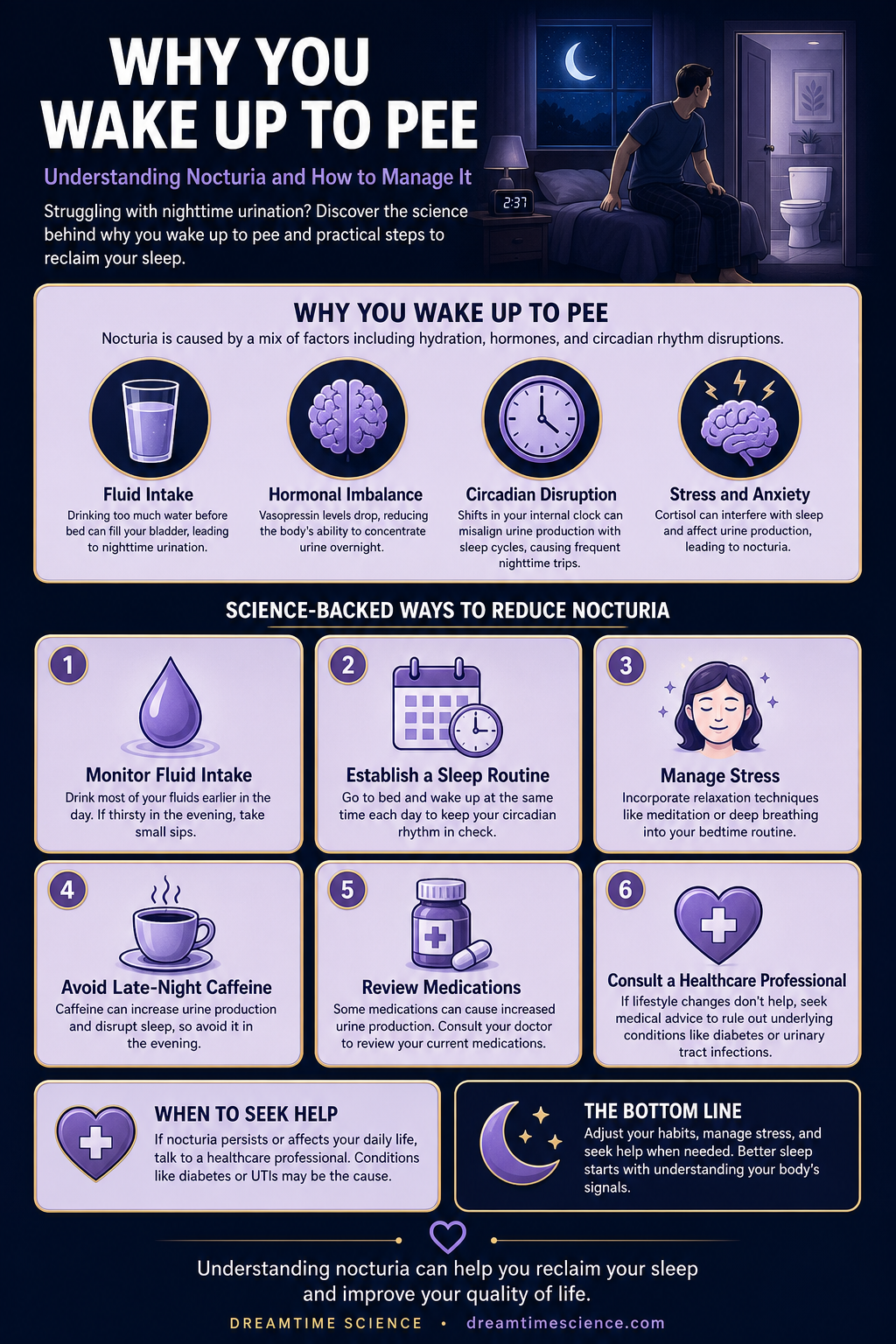
Nocturia: More Than a Midnight Nuisance
Nocturia sounds almost melodious, yet it's a disruptive force in the symphony of your sleep. It's the technical term for waking up at night to urinate. But don't mistake it for a trivial annoyance—there's a chorus of reasons orchestrating this nocturnal interruption.
Our bodies are whispering secrets about hydration, hormones, and the ever-mysterious circadian rhythm. Each factor calls out for attention, sometimes in harmony, sometimes in dissonance.
The night doesn't easily surrender its secrets. But understanding why you wake up to pee can unmask nocturia's true nature.
The H2O Question: To Sip or Not to Sip?
It's tempting to blame that final pre-bedtime drink for summoning nocturia. But the answer is hardly so simple. Yes, hydrating before bed can fill your bladder, but is it the villain in this nightly drama?
Our bodies are 24-hour operations, processing fluids and signaling the bladder around the clock. That mug of herbal tea might be innocent, or it might be the straw that overflows the bladder's cup.
The real story? It's in the timing and quantity. A fine balance between hydration and your body's ability to concentrate urine overnight plays a crucial role. A 2018 study in the American Journal of Kidney Diseases showed that individuals consuming fluids late at night had a 25% higher likelihood of experiencing nocturia.
Hormonal Harmony and the Nocturnal Cycle
As night descends, a hormone named vasopressin steps into the spotlight. Its role? To slow kidney function, reducing urine production so your bladder can rest easy. But when this hormone's rhythm falters, the bladder breaks its silence.
Vasopressin is the maestro conducting an intricate orchestra. A shift in its levels, and suddenly the bladder demands an encore at night.
Hormones also sway your circadian rhythm, the internal clock ticking with precision. Disruptions in this rhythm can lead to nocturia, pulling you from dreams back into wakefulness. A 2019 study in the Journal of Clinical Endocrinology & Metabolism found that circadian misalignment increased the frequency of nocturia by 30%.
Awake, Yet Asleep: A Circadian Dilemma
The circadian rhythm is more than just a sleep-wake cycle; it's the metronome for countless bodily processes. Like a conductor setting the tempo, it dictates when to produce more urine and when to hold back.
But what happens when the rhythm stumbles? Jet lag, shift work, or even late-night screen time can jolt this delicate cycle. Suddenly, it's not just a bladder issue—it's a matter of biological timing gone awry.
When the body's natural cues misalign with the clock on your wall, nocturia can become a frequent visitor. This misalignment is akin to experiencing jet lag without leaving your bedroom. As noted in Circadian Rhythms 101, maintaining a consistent sleep schedule can help realign these rhythms.
Stress and Slumber: The Mind's Midnight Role
Stress is a shadowy force that prowls the edges of restful sleep. It doesn't just haunt your mind; it stirs the body too. Cortisol, the stress hormone, can meddle with sleep patterns and even affect urine production.
When anxiety or stress becomes a bedfellow, it disrupts the harmony of hormones. In turn, this increased alertness might prompt a trip to the bathroom—not because of a full bladder, but because of a restless mind.
Is it the bladder or the brain keeping you from the land of dreams? Sometimes, it's both, intertwined in their nightly dance. For tips on reducing stress before bed, explore The Connection Between Stress and Insomnia and How to Break It.
Medical Mysteries: When to Seek Help
Sometimes, nocturia signals more than lifestyle quirks or minor disruptions. Conditions like diabetes or urinary tract infections can amplify the frequency and urgency of nighttime urination.
When nocturia becomes an insistent presence, ignoring it isn't wise. It could be a message from your body, whispering for attention beyond the realm of sleep science. Listening to these whispers—consulting a healthcare provider—can illuminate paths to understanding and relief.
The Role of Age and Gender
Age and gender can also play significant roles in nocturia. As we age, bladder capacity can decrease, and the production of vasopressin may decline, leading to increased urine production at night. Additionally, men may experience nocturia due to prostate enlargement, while women may encounter it post-menopause due to hormonal changes. A 2020 study in the BJU International journal highlighted that nocturia affects approximately 50% of men and women over the age of 60, emphasizing the need for age-specific management strategies.
What This Means for You
So what can you do if nocturia is stealing your sleep?
- Monitor Fluid Intake: Aim to drink the bulk of your fluids earlier in the day. If you're thirsty in the evening, take small sips.
- Establish a Sleep Routine: Try to go to bed and wake up at the same time each day to keep your circadian rhythm in check.
- Manage Stress: Incorporate relaxation techniques, like meditation or deep breathing, into your bedtime routine.
- Consult a Professional: If lifestyle changes don't help, seek medical advice to rule out underlying conditions.
By tuning into your body's signals, adjusting evening habits, and seeking guidance when needed, you invite a more harmonious night's rest.
Conclusion
Nocturia isn't merely a midnight inconvenience. It's a reminder of the body's intricate dance—a dance that, with a little insight, can become a waltz rather than a stumble in the night. Understanding its causes transforms the mystery into manageable realities.
Want to experience these sleep science concepts with our soothing narration and ambient soundscapes? Check out our latest video on YouTube @dreamtimescience.
Frequently Asked Questions
Why do I pee so much at night but not during the day?
Your body's natural rhythms and hormone levels fluctuate throughout the day. At night, decreased vasopressin production or a misaligned circadian rhythm can lead to increased urine production, resulting in nocturia. Additionally, nighttime is when the body often processes accumulated fluids from the day, which can contribute to increased urination.
Can certain foods or drinks cause nocturia?
Yes, certain foods and drinks, like caffeine and alcohol, can increase urine production. A 2015 study in the Journal of Urology found that caffeine intake was linked to a 20% increase in nocturia frequency. For more on caffeine's effects, check out Caffeine Half-Life: How Long Caffeine Actually Stays in Your System.
Is nocturia a normal part of aging?
Nocturia can become more common with age due to changes in bladder capacity and hormone levels. However, frequent nocturia isn't necessarily normal and may warrant a medical evaluation. The International Journal of Clinical Practice in 2021 emphasized that while nocturia is prevalent in older adults, it should not be dismissed as merely a consequence of aging without proper assessment.
How does stress contribute to nocturia?
Stress increases cortisol levels, which can disrupt sleep and potentially increase nighttime urination. Relaxation techniques can help alleviate this stress-induced nocturia.
When should I see a doctor about nocturia?
If nocturia disrupts your sleep consistently or is accompanied by other symptoms like pain or unusual urine color, it's advisable to consult a healthcare provider for further evaluation.
Fall Asleep to a Science Lecture
Put tonight's reading into practice — pick a gentle, softly-narrated episode and let the Professor talk you to sleep.
 Tonight's episodeThe Invisible Threads of Information