
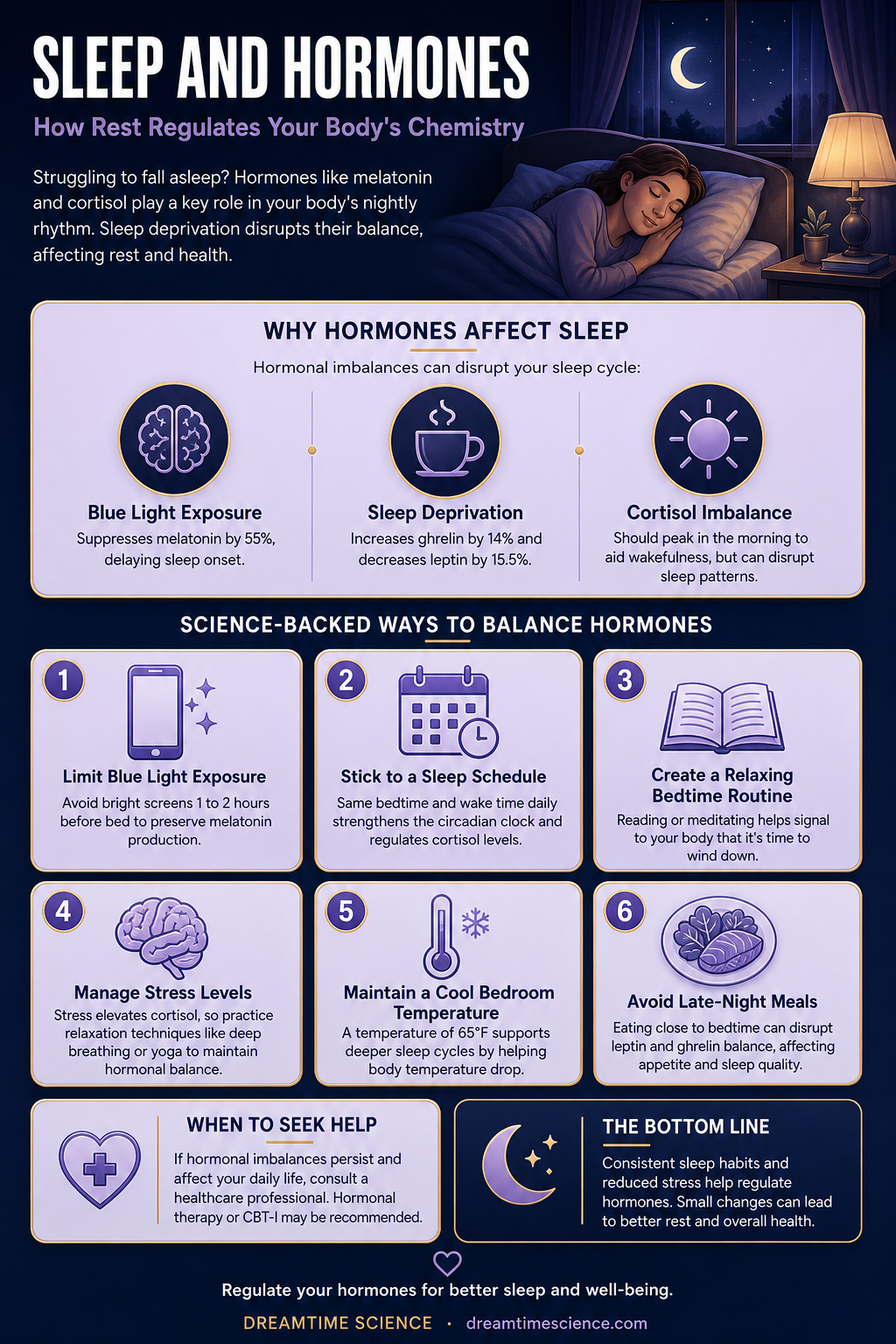
The short answer: Sleep regulates your body’s chemistry primarily through the influence of hormones like melatonin, cortisol, ghrelin, insulin, and leptin. For example, blue-enriched light can suppress melatonin production by 55%, while sleep deprivation increases ghrelin levels by 14% and decreases leptin by 15.5%. Prioritizing consistent sleep schedules and reducing stress helps maintain hormonal balance and promote restful sleep.
You've felt it, that odd sensation when sleep just slips away. Tossing, turning, and wondering why your body isn't cooperating. You might suspect the usual culprits — stress, caffeine, or maybe that late-night snack. But what if the real disruptor is something you can't see? Something that orchestrates your body's nightly symphony from within: hormones.
Hormones are the whispering conductors of your body's orchestra, playing a crucial role in the delicate dance of sleep.
But what are these whispers telling you?
Key takeaways
- Sleep deprivation can disrupt the balance of hormones like insulin and ghrelin.
- Artificial light exposure, especially blue light, can suppress melatonin production.
- Cortisol, the "stress hormone," should ideally peak in the morning to aid wakefulness.
- Leptin, which signals fullness, decreases with insufficient sleep, increasing appetite.
- Consistent sleep schedules help regulate cortisol levels and promote hormonal balance.
The Melatonin Mechanism
Consider melatonin, your body's gentle nudge towards slumber. As the sun dips below the horizon, melatonin levels rise, whispering to your brain, "It's time to unwind." This hormone doesn't grab you by the hand and drag you to bed. Instead, it dims the lights, setting the stage for a peaceful night.
But when artificial light floods your eyes, the message gets muddled. The screen's glow tells your brain it's still daytime, and melatonin waits in the wings, uncalled. A 2014 study published in the Journal of Clinical Endocrinology & Metabolism found that blue-enriched light can suppress melatonin production by 55%, delaying sleep onset. The entire hormonal orchestra can fall out of sync, leading to disrupted sleep cycles.
What This Means for You
So what can you do? In the evening, reduce exposure to bright screens and consider dimming the lights around you. You might explore alternatives like reading a book or indulging in a relaxing hobby to help prepare your body for bed. For more on how artificial light impacts sleep, check out our article on Blue Light Before Bed: Myth or Reality?.
Cortisol: The Morning Herald
As night gives way to dawn, cortisol steps into the spotlight. Known as the "stress hormone," it may sound like a villain, but cortisol is crucial for waking up and facing the day. It gently lifts you from the depths of sleep, preparing you to tackle whatever comes your way.
But when cortisol levels peak at the wrong time — say, when you're trying to catch some Zs — it becomes the unwanted wake-up call. Stress and irregular sleep patterns can lead to a cortisol crescendo, leaving you wired when you should be winding down. Research in 2015 from the Journal of Clinical Endocrinology & Metabolism showed that chronic stress can cause cortisol levels to spike at night, disrupting sleep patterns.
What This Means for You
To keep cortisol in check, establish a regular sleep schedule. This helps your body know when to wind down and when to wake up. Mindfulness techniques, such as meditation or deep breathing, can also help manage stress levels before bed. Dive deeper into stress-induced insomnia in our article on The Connection Between Stress and Insomnia (And How to Break It).
The Dance of Insulin and Ghrelin
Imagine a dance floor filled with hunger and fullness, where insulin and ghrelin take turns leading the steps. Sleep deprivation tilts the balance, making ghrelin the star of the show, urging you to eat more. Meanwhile, insulin struggles to keep up, leaving your body craving energy it doesn't need.
A 2010 study in Annals of Internal Medicine found that short sleep duration increased ghrelin levels by 14% and decreased leptin by 15.5%, promoting increased appetite and potential weight gain. These hormonal missteps don't just make you tired; they increase your hunger, pushing you toward high-calorie snacks.
Leptin's Lullaby
Leptin, the hormone of satiety, usually hums softly, telling you when it's time to put down the fork. But without enough sleep, this tune fades, and leptin's message is drowned out by the cacophony of a restless night. You're left feeling hungry, even when your body's had enough.
The irony? A sleepless night can convince your brain it's starving, even as your stomach is full. According to a 2004 study from the Journal of Clinical Endocrinology & Metabolism, sleep restriction led to a 20% decrease in leptin and a subsequent increase in appetite.
The Sleep-Endocrine Connection
Your body's chemistry isn't a rigid structure; it's a fluid, dynamic system that depends on rest to stay balanced. Poor sleep throws this balance off-kilter, sending ripples through your endocrine system. The result is a hormonal storm that affects everything from mood to metabolism.
The quiet power of sleep is in its ability to reset, recalibrate, and restore. It's not just a break from the day — it's a vital process that keeps your body's chemistry in tune.
Historical Context: The Evolution of Sleep Science
Understanding the intricate relationship between sleep and hormones has evolved dramatically over the years. In the early 20th century, sleep was largely considered a passive state. However, with advancements in technology, such as electroencephalography (EEG), scientists began to unravel the complex processes occurring during sleep. The discovery of REM sleep in the 1950s marked a turning point, revealing sleep as an active state with distinct stages. This laid the groundwork for exploring how hormones like melatonin and cortisol influence sleep architecture. For a deeper dive into the history of sleep science, visit our article on The History of Sleep Science: From Freud to Modern Brain Imaging.
Conclusion
Sleep isn't just a passive state; it's an active process that recalibrates the delicate systems keeping you alive. Embrace the notion that sleep is your body's way of pressing pause and recalibrating. Each night, your hormonal orchestra attempts to find its harmony, allowing you to drift into the restorative embrace of sleep. To explore more on how hormones impact sleep and weight, visit our article on Sleep and Weight Gain: Why Poor Sleep Makes You Gain Weight.
Frequently Asked Questions
What role does melatonin play in sleep?
Melatonin is a hormone that signals your brain it's time to wind down. It helps regulate your sleep-wake cycle by lowering alertness and body temperature, facilitating the transition to sleep. Melatonin's role extends beyond sleep initiation; it also influences sleep quality and duration. According to a 2018 review in Nature and Science of Sleep, melatonin supplementation can improve sleep efficiency and total sleep time in individuals with insomnia.
How does cortisol affect sleep?
Cortisol is essential for waking up but can disrupt sleep if levels peak at night. High cortisol levels at inappropriate times can lead to insomnia and restless nights. A 2015 study in the Journal of Clinical Endocrinology & Metabolism found that stress-induced cortisol spikes can significantly disrupt sleep patterns.
Why do I feel hungrier when I'm sleep-deprived?
Lack of sleep increases ghrelin (hunger hormone) and decreases leptin (satiety hormone), making you feel hungrier and less satisfied after eating. A 2010 study in Annals of Internal Medicine showed that sleep deprivation led to an increase in appetite, especially for high-calorie foods.
Can improving my sleep help with weight management?
Yes, getting adequate sleep helps regulate hormones like insulin, ghrelin, and leptin, reducing cravings and promoting a healthy metabolism. Addressing sleep issues can be a crucial step in weight management. A 2013 study in the American Journal of Clinical Nutrition highlighted that improved sleep quality is associated with better weight control and reduced risk of obesity.
How can I manage hormone-related sleep issues?
Establish a regular sleep schedule, reduce screen time before bed, and practice stress-reduction techniques like meditation. These strategies can help balance hormones and improve sleep quality. For more practical tips, see our guide on 7 Science-Backed Ways to Beat Insomnia Tonight. Want to experience these sleep science concepts with our soothing narration and ambient soundscapes? Check out our latest video on YouTube @dreamtimescience.
Fall Asleep to a Science Lecture
Put tonight's reading into practice — pick a gentle, softly-narrated episode and let the Professor talk you to sleep.
 Tonight's episodeDNA's Silent Blueprint: Uncovering Life’s Deepest Secrets
Related articles

Sleep and Appetite Control: How Rest Regulates Hunger Hormones
Insufficient sleep disrupts the balance of hunger hormones, increasing ghrelin and decreasing leptin. Research shows that sleep-deprived individuals consume an…

The Window of Sleep: Understanding Your Body's Sleep Gates
Your sleep window is a period when your body's natural rhythms align, facilitating sleep, and is influenced by factors like your circadian rhythm and sleep pressure.…

Sleep and Blood Sugar: How Rest Affects Your Glucose Levels
Insufficient sleep significantly impacts blood sugar regulation. Studies show individuals sleeping less than six hours a night face a 32% higher risk of type 2…