← Back to Articles
Sleep Science

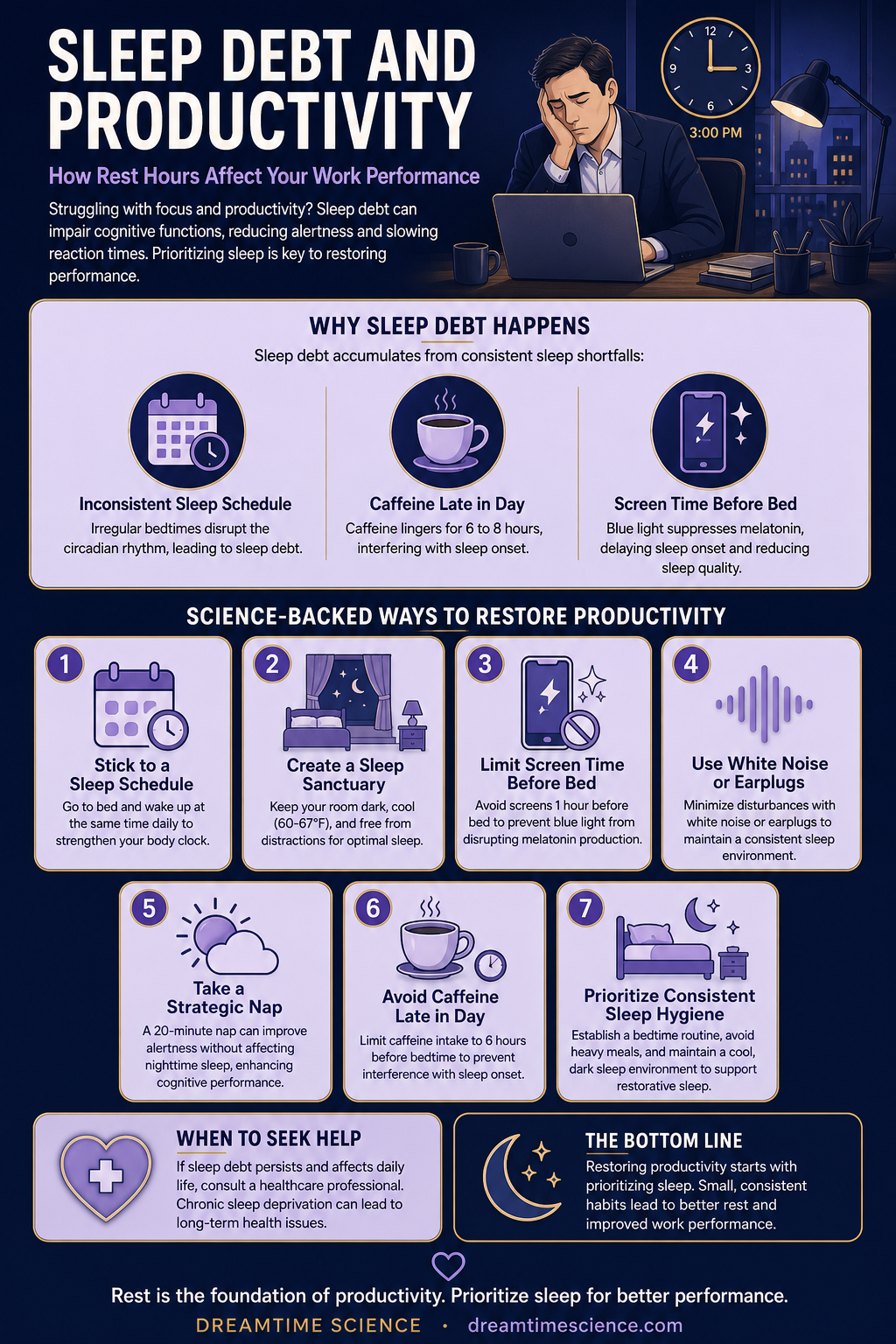
The short answer: Sleep debt accumulates when you consistently miss out on the recommended 7-9 hours of sleep each night, creating a deficit that impairs cognitive functions. Research indicates that individuals with sleep debt are approximately 20% less productive than their well-rested counterparts, experiencing diminished alertness and slower reaction times. Prioritizing sleep and establishing consistent sleep habits are crucial for restoring cognitive performance and breaking the cycle of fatigue.
Do you find yourself yawning through morning meetings or spacing out mid-afternoon? It's not just you. It's your sleep.
Or rather, your lack of it.
The term "sleep debt" might sound novel, but its effects are all too familiar. It's that sluggish sensation, the brain fog, the endless cups of coffee that do little more than warm your hands. Sleep debt creeps up quietly. You miss an hour here, a late night there, until suddenly, your body and mind are writing checks they can't cash. And your productivity pays the price.
Key takeaways
- Sleep debt accumulates when you consistently miss out on your recommended 7-9 hours of sleep each night.
- Cognitive functions like decision-making and memory are impaired by even small reductions in sleep.
- Fatigue can create a vicious cycle where longer work hours lead to less sleep, increasing sleep debt.
- A consistent sleep schedule strengthens your body's natural rhythm, improving sleep and wakefulness.
- Short naps (around 20 minutes) can improve alertness and performance without disrupting nighttime sleep.
What is Sleep Debt?
Picture your sleep like a bank account. Ideally, you want to keep a healthy balance, replenishing what you spend daily. But life doesn't always stick to the ideal. When you shortchange yourself on sleep, you create a deficit. This is sleep debt. Over time, it accumulates, dragging you down like an anchor.
Your brain feels it first. Decision-making becomes a chore, creativity takes a hiatus, and your once sharp focus is dulled to a mere shadow. According to a 2017 study published in the Nature Reviews Neuroscience, even minor reductions in sleep can impair cognitive functions like attention and memory.
Each night you miss out on the recommended 7-9 hours of sleep, you add to your sleep debt. The body attempts to make up for this lost sleep, but chronic deprivation can lead to long-term deficits. Sleep is not just a passive state. It is an active process where your body and mind undergo essential repairs and growth, as discussed in Sleep Cycles Explained.
Why Sleep Matters for Work Performance
Ever tried to hold a conversation underwater? That's what working with sleep debt feels like. Sleep is when your brain restores and repairs. It's when memories consolidate and neural pathways strengthen. Without it, cognitive functions falter.
Concentration splinters. Problem-solving becomes a Sisyphean task. Errors multiply. Fatigue isn't just tiredness. It's a cognitive impairment. Think of sleep as the software update your brain needs to function smoothly. Skip it, and expect glitches.
A 2018 study in the Journal of Clinical Sleep Medicine found that sleep-deprived individuals are 20% less productive than their well-rested counterparts. This isn't just about feeling groggy; it's about how your brain processes and retains information. During sleep, especially in the REM stage, the brain processes and integrates new information and experiences, as we explored in REM Sleep Explained.
What This Means for You
By learning to manage your sleep debt, you can enhance your work performance and overall well-being.
The Science of Sleep and Cognition
There's a biological ballet playing out as we sleep. During REM sleep, the brain is busy filing away experiences, enhancing learning, and fostering insights. Non-REM sleep, meanwhile, is when cells repair and grow. Disturb this cycle, and you disturb your cognitive prowess.
Research shows that even one night of poor sleep can lead to diminished alertness and slower reaction times. Over time, the effects compound, eroding your efficiency and productivity. A 2003 study in Neuropsychology demonstrated that individuals who slept less than 6 hours per night for two weeks performed as poorly on cognitive tasks as those who were sleep-deprived for 24 hours straight.
Sleep debt also affects emotional regulation. The amygdala, the brain's emotional center, becomes more reactive with sleep deprivation, increasing stress and irritability. As discussed in Sleep and Mental Health: How Rest Affects Depression and Anxiety, poor sleep can exacerbate mental health issues.
What This Means for You
Understanding the science of sleep and cognition helps you appreciate the importance of rest. Prioritize your sleep, and you'll notice improvements in focus, creativity, and decision-making.
The Vicious Cycle of Fatigue and Productivity
Fatigue isn't just an outcome. It's a catalyst. Sleep debt lowers your productivity, which often leads to longer hours to compensate. Those longer hours eat into sleep, fueling further sleep debt. It's a cycle as vicious as it is common. You're not lazy. You're sleep-deprived.
This cycle can become its own kind of insomnia, where the pressure to perform overrides the body's natural urge to rest. Breaking free requires more than willpower. It requires understanding and action, such as adopting a consistent sleep schedule and creating a conducive sleep environment. As detailed in Sleep Hygiene 101: Building a Better Bedtime Routine From Scratch, good sleep hygiene practices can significantly improve your sleep quality.
Reclaiming Your Sleep, Restoring Your Performance
You might not be able to rewind those sleepless nights, but you can start fresh. Begin with consistency. A regular sleep schedule strengthens your circadian rhythm, aligning your body clock with natural day-night cycles. This rhythm is like an internal conductor orchestrating your sleep and wakefulness, as explained in Circadian Rhythms 101: How Your Body's Internal Clock Controls Sleep.
Create a sleep sanctuary. Dark, cool, free of distractions. Your bedroom should invite rest, not resist it. Consider these tips:
- Darkness: Use blackout curtains or a sleep mask to block light.
- Cool Temperature: Keep your room between 60-67°F (15-19°C) for optimal sleep.
- Sound: Use white noise or earplugs to minimize disturbances.
And remember the power of naps. A short, strategic nap can recharge cognitive functions without sabotaging nighttime rest. According to a 2015 study in the Journal of Sleep Research, a 20-minute nap can improve alertness and performance without affecting nighttime sleep, as explored in The Science of Power Napping: Timing, Duration, and Benefits.
The Path to Better Nights and Brighter Days
Sleep debt is real, but it's not insurmountable. By prioritizing rest, you pave the way for productivity. The fog lifts, focus sharpens, and your day finds its rhythm. Sleep isn't just a luxury. It's a necessity.
When you honor your body's need for rest, every part of you benefits. Your work performance, your mood, your health. They all rise with the tide of restful sleep. So tonight, as you lay down, remember: a good night's sleep is the foundation for a productive tomorrow.
Conclusion
Sleep debt is a silent thief, robbing you of clarity, creativity, and well-being. But it's not unbeatable. Understanding its impact and taking actionable steps can restore your productivity and enhance your quality of life. Want to experience these sleep science concepts with our soothing narration and ambient soundscapes? Check out our latest video on YouTube @dreamtimescience.
Frequently Asked Questions
What is sleep debt, and how is it calculated?
Sleep debt is the cumulative effect of not getting enough sleep. It's calculated by subtracting the hours of sleep you actually get from the hours you ideally need. Over time, this deficit can impact your health and cognitive performance.
Can you pay off sleep debt?
Yes, you can pay off sleep debt, but it requires time and consistency. Extending your sleep duration over several nights and maintaining a regular sleep schedule can help reduce sleep debt gradually.
How does sleep debt affect decision-making?
Sleep debt impairs decision-making by affecting the prefrontal cortex, the brain region responsible for planning and impulse control. A 2019 study in Nature Communications found that sleep-deprived individuals are more likely to make risky decisions.
Is it possible to adapt to less sleep?
While some people believe they can adapt to less sleep, research shows that cognitive performance declines with sleep deprivation, regardless of subjective feelings of adaptation. The brain cannot fully compensate for lost sleep.
Are there long-term effects of chronic sleep debt?
Chronic sleep debt can lead to long-term health consequences, including increased risk of cardiovascular disease, obesity, and diabetes. According to a 2015 meta-analysis published in the Journal of Sleep Research, chronic sleep deprivation is associated with a 13% increased risk of mortality.
Tonight's Listening
 Tonight's episodeHow Gravity Can Bend Time: The Cosmic Clock Puzzle
Fall Asleep to a Science Lecture
Put tonight's reading into practice — pick a gentle, softly-narrated episode and let the Professor talk you to sleep.
Tonight's episodeHow Gravity Can Bend Time: The Cosmic Clock Puzzle
Related articles

How Sleep Works
Sleep Debt: How Your Body Tracks Missing Sleep (And Why It Matters)
Sleep debt accumulates when you consistently miss hours of restorative rest, much like a financial debt. A 2017 Nature study showed chronic sleep restriction can…

Sleep, Mind & Mood
Sleep and Decision-Making: How Fatigue Impairs Your Judgment
Fatigue significantly impairs judgment, impacting the prefrontal cortex and lowering inhibitions against impulsive decisions. Even a single night of poor sleep can…

How Sleep Works
Sleep and Athletic Performance: How Rest Builds Muscle and Speed
You’ve pushed through another grueling workout, sweat pouring, muscles aching.