
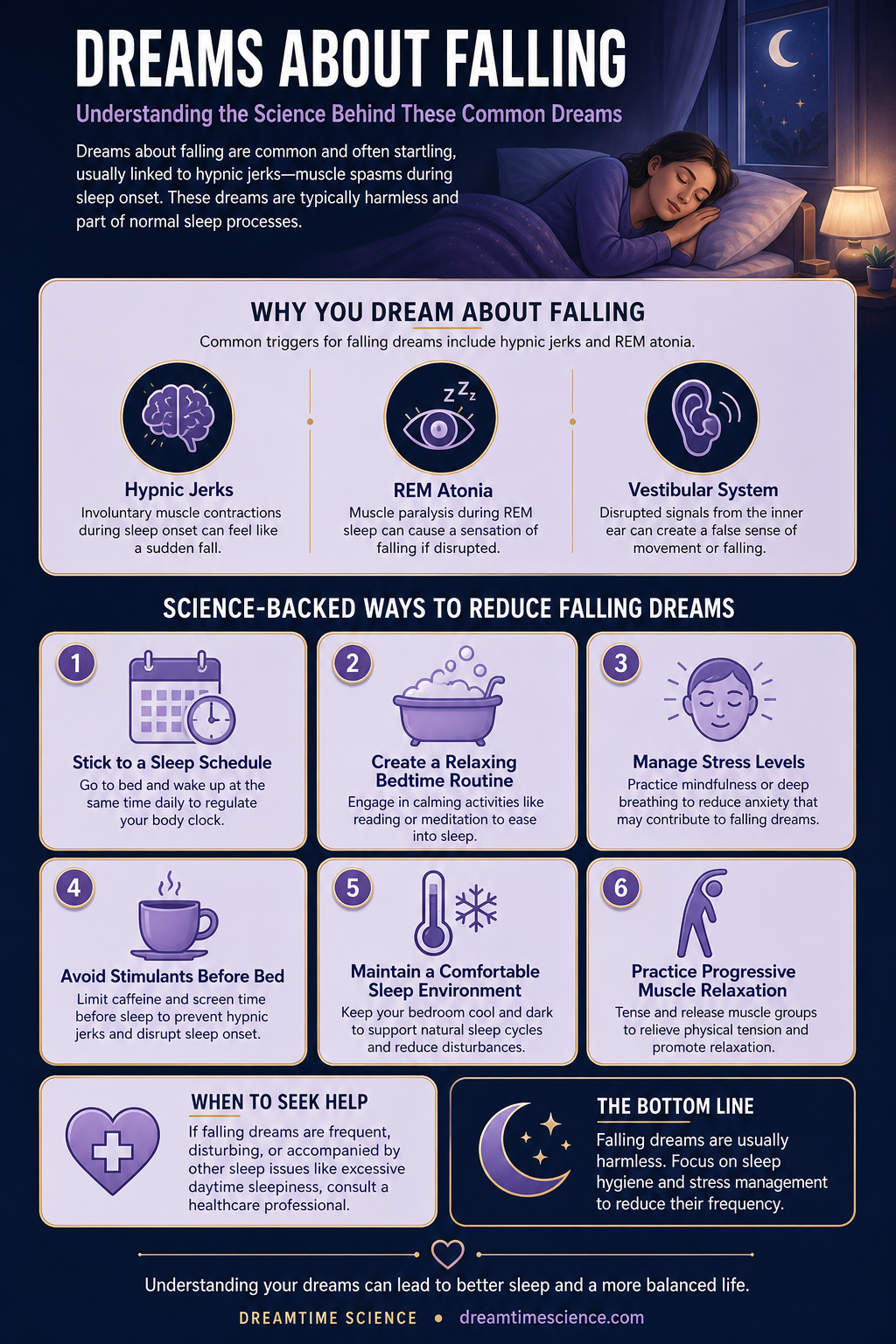
Dreams about falling are a common and often startling experience, frequently attributed to a physiological phenomenon called hypnic jerks—involuntary muscle contractions that occur during the transition from wakefulness to sleep. While the sensation can be unsettling, falling dreams are typically not indicative of an underlying medical issue and often represent a normal part of the sleep process.
Key takeaways
- Falling dreams often result from hypnic jerks, sudden muscle contractions during sleep transition.
- REM atonia, the paralysis of muscles during REM sleep, can sometimes fluctuate, triggering a falling sensation.
- The vestibular system, responsible for balance, can misfire during sleep, creating the feeling of falling.
- Dreams about falling may symbolize feelings of insecurity or a lack of control in waking life.
- Falling dreams could be a leftover evolutionary response, linked to ancient survival instincts.
What Causes Dreams About Falling?
The most frequent trigger for dreams about falling is a hypnic jerk, a sudden, involuntary contraction of muscles often accompanied by a hallucinatory sensation of stumbling or falling. This jerk can occur as the body shifts from active wakefulness to the relaxed state of sleep, particularly during the initial stages of non-rapid eye movement (NREM) sleep. As the muscles begin to relax, the brain can misinterpret this process as a sign of losing control or a physical descent. The body may react with a sudden spasm, which the dreamer perceives as a fall.
The Role of REM Atonia in Falling Dreams
During rapid eye movement (REM) sleep, the brain actively paralyzes most of the body's muscles – a state known as REM atonia – to prevent the enactment of dream content. This paralysis is essential for safe dream experiences. However, the onset of REM atonia isn't always seamless. Fluctuations in the timing of this muscle relaxation can contribute to the sensation of falling as the brain struggles to fully disengage motor functions.
Falling Dreams and the Vestibular System
The vestibular system, located in the inner ear, is largely responsible for maintaining balance and spatial orientation. Disconnections or misinterpretations of signals from the vestibular system during sleep can manifest as sensations of movement, including falling. The brain relies on continuous input from this system to understand where the body is in space, and when this input becomes disrupted during the sleep transition, it can lead to the experience of an illusory fall.
Dreams About Falling: What They Mean
While typically rooted in neurological processes, dreams about falling can also hold psychological significance. These dreams are frequently associated with feelings of insecurity, anxiety, or a perceived lack of control in waking life. A fall can represent a fear of failure, loss of status, or a general sense of instability. The intensity and emotional content of the dream may correlate with the degree of stress or anxiety the individual is experiencing. It is important to remember that dream interpretation is subjective, and the meaning of a falling dream will vary based on the dreamer's personal experiences and emotional state.
The Evolutionary Roots of Falling Dreams
One theory posits that dreams about falling may be remnants of an ancient survival mechanism. Early humans, sleeping in trees or on elevated surfaces, would benefit from an immediate reaction to the sensation of falling—triggering a reflexive response to adjust their position and prevent injury. Though modern humans no longer face these same physical dangers, the brain may retain this circuitry as a protective reflex, resulting in the vivid sensation of falling during sleep.
Post-Navigation
Although falling dreams can be momentarily frightening, they are typically harmless and short-lived. Most individuals experience such dreams infrequently, and they rarely disrupt overall sleep quality. It is important to avoid attributing undue significance to a single dream experience. Regular, restful sleep and stress management techniques contribute to a more stable sleep experience and may reduce the occurrence of unsettling dreams.
Frequently Asked Questions
Why do I dream about falling just as I'm falling asleep?
Falling dreams that occur during the onset of sleep are frequently caused by hypnic jerks, involuntary muscle spasms as the body transitions from wakefulness. These are a normal part of the sleep process, however experiencing them can feel like a sudden fall, causing momentary alarm.
Can falling dreams indicate a medical issue?
Generally, falling dreams are not indicative of a medical problem. However, if they are frequent, intensely disturbing, or accompanied by other concerning sleep symptoms like excessive daytime sleepiness, it is advisable to consult a healthcare professional. Such symptoms could warrant further investigation to rule out underlying sleep disturbances.
Do falling dreams have a psychological meaning?
Yes, dreams about falling can often symbolize feelings of insecurity, loss of control, or fear of failure in waking life. While not a definitive sign of psychological distress, recurring falling dreams may indicate an underlying sense of instability or unmet needs.
How can I reduce the frequency of my falling dreams?
Establishing a consistent sleep schedule, creating a relaxing bedtime routine, and managing stress levels can help minimize the occurrence of unsettling dreams. Techniques like mindfulness meditation and deep breathing exercises may also promote relaxation and improve sleep quality.
Why do I feel this jolt when I dream about falling?
The jolt experienced during a falling dream is a result of the hypnic jerk, the involuntary muscle contraction. This spasm is the body’s natural reaction to the misinterpreted sensation of losing balance or control during the transition to sleep, and the resultant feeling is a momentary awakening.
Are falling dreams common for most people?
Falling dreams are a very common experience, with a large percentage of the population experiencing them at some point in their lives. They represent a normal part of the dreaming process and are not typically a cause for concern.
Fall Asleep to a Science Lecture
Put tonight's reading into practice — pick a gentle, softly-narrated episode and let the Professor talk you to sleep.
 Tonight's episodeDNA's Silent Blueprint: Uncovering Life’s Deepest Secrets
Related articles

Dreams About Teeth Falling Out: What They Really Mean
Dreams about teeth falling out are a common and often unsettling experience.

Why You Twitch While Falling Asleep (Hypnic Jerks Explained)
Hypnic jerks, or sleep starts, are sudden, involuntary twitches that occur as you transition into sleep, typically during stage one. They feel like a falling…

Sleep Disorders You've Never Heard Of: Rare Conditions and What They Mean
Several rare sleep disorders exist beyond common insomnia, each with unique and often unsettling manifestations. Fatal Familial Insomnia, linked to a genetic…