
Whether to share your bed with a dog or cat is a common question for pet owners. This decision impacts sleep quality for both humans and animals [2]. This article explores the science behind co-sleeping with pets. We'll examine the potential benefits and drawbacks, alongside practical advice. It will also cover sleep habits, emotional needs, and creating a restful environment.
Key takeaways
- Sharing your bed with a pet can feel comforting and build a strong sense of connection.
- Pets can disrupt sleep through movement, noise, temperature changes, or allergic reactions.
- A consistent bedtime routine can help pets and humans align their internal clocks.
- Finding a compromise, such as a pet bed in your room, balances closeness and restful sleep.
- Prioritizing your own sleep hygiene is perfectly acceptable, and retraining is possible.
Should Your Dog or Cat Sleep in Your Bed?
Many people feel a deep connection with their pets. Sharing a bed can feel comforting and build trust. A pet’s breathing or purring might even feel relaxing. However, established routines can be hard to break.
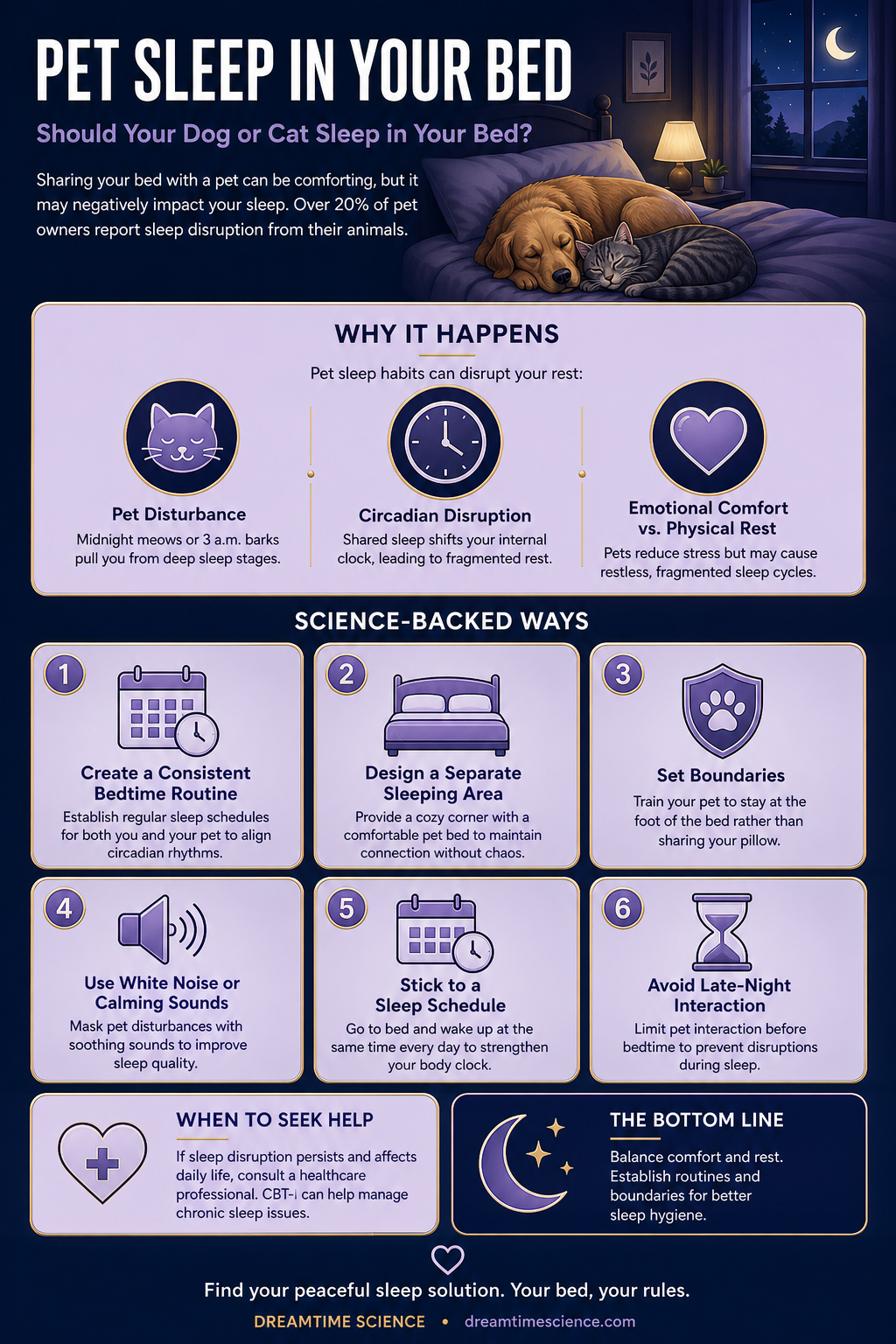
Co-sleeping with a pet can quickly become a habit. Initially cozy nights may start to feel less restful. You might wake up to paws or a tail disrupting your sleep. A 2014 Mayo Clinic survey showed that over 20% of pet owners felt their pets affected their sleep [1]. The reason is unclear, but the impact is real.
Understanding Sleep Disruption
Researchers have not yet fully explored how pets affect sleep. One Health describes the interactions between humans, animals, and the environment [2]. These interactions can have unforeseen consequences for sleep quality. It seems pets don't always respect sleep cycles called REM cycles.
Potential Issues with Co-Sleeping
Here are some ways pets can disrupt sleep:
- Movement: Paws, tails, or shifting bodies can interrupt sleep.
- Noise: Snoring, panting, or meowing can be distracting.
- Temperature: Pets can generate heat, impacting sleep temperature.
- Allergies: Pet dander can trigger allergic reactions, causing discomfort.
- Space: Pets can take up valuable space, limiting movement.
The Dance of the Circadian Rhythm
Your internal clock—a finely tuned circadian rhythm—thrives on consistency. It signals when to sleep, when to wake, when to dream. But throw a pet into the mix and things can get off-beat.
Animals sleeping with humans often means more than just company. It can mean a shift in your sleep patterns. A midnight meow or a 3 a.m. bark can pull you out of a deep sleep stage, leaving you groggy in the morning. A 2015 study published in Human-Animal Interaction Bulletin found that pet owners had higher rates of disrupted sleep compared to non-pet owners.
Your circadian rhythm, interrupted, might struggle to find its usual rhythm. It's not just about the sleep you lose—it's about the quality of the rest you get. This is similar to the effects of blue light on melatonin production, as explored in Blue Light Before Bed: Myth or Reality? What Research Actually Shows.
Do Pets in Bed Really Help You Sleep?
Sharing your bed with a dog or cat can feel wonderful. Their presence offers comfort and a sense of connection. This closeness can ease stress and bring a feeling of safety at night. The human-pet bond is a powerful thing [1].
However, this emotional benefit can affect your sleep. Your body may feel secure, but your sleep cycles can be disrupted. You might find yourself tossing and turning more often. This happens even if you don't realize it at the time. Sleep cycles are periods of sleep with different levels of awareness [2].
Co-sleeping's effect on mental health is complex. It can lower anxiety and depression for some people [1]. But it often comes with poorer sleep quality. Finding a balance between these factors is key to restful nights.
Signs Your Pet's Presence is Disrupting Sleep:
- Restlessness throughout the night
- Difficulty falling asleep
- Waking up frequently
- Feeling tired even after a full night in bed
Do Pets in Bed Disrupt Your Sleep?
Pets often seem to take charge when sharing a bed. Cats might claim pillows as their own. Dogs can push you toward the edge of the mattress. These actions feel like a constant negotiation for space.
The lines between your sleep and theirs become unclear. You may feel like a visitor in your own bed. Some people find it easy to train pets to sleep separately. Others find the separation difficult.
Finding Balance
Shared sleep spaces can be tricky. It's about finding what works best for everyone. Consider how your pet's behavior impacts your sleep quality. Human-animal interaction can be beneficial [1], but also disruptive.
Here are some ways to navigate the situation:
- Establish a predictable bedtime routine: Pets benefit from routine, just like humans. A regular sleep schedule helps everyone rest better. The Perfect Bedtime Routine According to Sleep Scientists offers more details.
- Provide a dedicated sleep spot for your pet: This could be a comfortable bed in your room. Being nearby allows for closeness without disrupting your sleep.
- Set clear limits: If your pet sleeps in bed, consider training them to stay at the foot. This keeps them close while respecting your space.
Creating a Peaceful Sleep Environment for You and Your Pet
Routine is vital for both humans and animals. Pets thrive on predictability, mirroring our own needs. A consistent bedtime routine can help align your internal clocks. This synchronization can promote easier sleep for everyone.
Offering a comfortable spot for your pet within your bedroom is a good compromise. You'll still feel connected, but avoid sharing the bed. A designated pet bed lets them feel close without disrupting your sleep space. This can be especially helpful if your pet moves a lot.
It’s perfectly acceptable to set boundaries around your sleep. You have the right to prioritize your own rest. Retraining can help both you and your pet adjust to new sleep arrangements.
The Calm After the Storm
As night turns into dawn, the decision rests with you. Pets can be both the comfort and the chaos of our nights. But ultimately, your sleep hygiene might benefit from a little distance. Or not.
It's about what brings you peace as you drift off into the velvet embrace of night. Whether it’s a warm nose against your cheek or the gentle hum of a purr, the choice is yours.
Find what works. Rest easy. And let the night unfold gently.
Conclusion
Pets in bed can offer warmth and companionship but may interrupt sleep cycles. Your circadian rhythm thrives on consistency, and any disturbance can impact sleep quality. Finding a balance between comfort and rest is essential.
Want to experience these sleep science concepts with our soothing narration and ambient soundscapes? Check out our latest video on YouTube @dreamtimescience.
References
- M. Chan, Gonzalo Tapia Rico (2019). The "pet effect" in cancer patients: Risks and benefits of human-pet interaction. Critical reviews in oncology/hematology https://doi.org/10.1016/j.critrevonc.2019.08.004
- Alvarado-Serrano M, Mora-Izaguirre MO, Juárez-Lira A et al. (2026). Characterization of human-animal interactions among pet owners in Mexico from a One Health perspective: A cross-sectional study. One health (Amsterdam, Netherlands) https://doi.org/10.1016/j.onehlt.2026.101426
Frequently Asked Questions
Is co-sleeping with pets bad for my sleep?
Co-sleeping with pets can negatively affect your sleep. Research from 2015 showed pet owners had more sleep issues. This is likely due to pet movement and noise during the night. Some people still find the comfort worthwhile, despite these disruptions.
Can sleeping with pets cause health issues?
Sleeping with pets can sometimes worsen allergies or asthma. Pet dander, tiny skin flakes, can trigger these conditions. Keeping your bedroom clean and your pet healthy can help reduce these issues.
How can I train my pet to sleep in its own bed?
You can teach your pet to sleep in its own bed with patience. First, make sure their bed is cozy and inviting. Reward them with treats and praise when they go near or into it. This positive approach helps them associate the bed with good things.
Does a pet's presence reduce anxiety during sleep?
Yes, sharing a bed with a pet may ease anxiety. A 2017 study found it can lower anxiety and depression. This comfort may help those who worry about sleep. Many people find a sense of security with their pets nearby.
What if my pet refuses to stay in its bed?
If your pet avoids its bed, encourage short visits first. Reward them when they stay there, even briefly. This positive approach builds comfort and association. Consistency is key for helping your pet adjust to a new routine.
Fall Asleep to a Science Lecture
Put tonight's reading into practice — pick a gentle, softly-narrated episode and let the Professor talk you to sleep.
 Tonight's episodeDNA's Silent Blueprint: Uncovering Life’s Deepest Secrets
Related articles

Should You Get Out of Bed When You Can't Sleep? The 20-Minute Rule
You know the feeling all too well. The clock ticks mercilessly by, each minute heralding dawn's arrival, and yet sleep eludes you like a ghost in the night.

Sleep and Digestion: Why You Shouldn't Eat Right Before Bed
Eating a meal too close to bedtime forces your body to digest while it should be resting, potentially leading to restlessness and delayed sleep. A 2015 study found…

Sleep Myths Debunked: Separating Sleep Science from Fiction
The idea that everyone needs exactly eight hours of sleep is a common myth; individual sleep needs vary considerably. Some people thrive on as little as six hours,…