← Back to Articles
Sleep Science

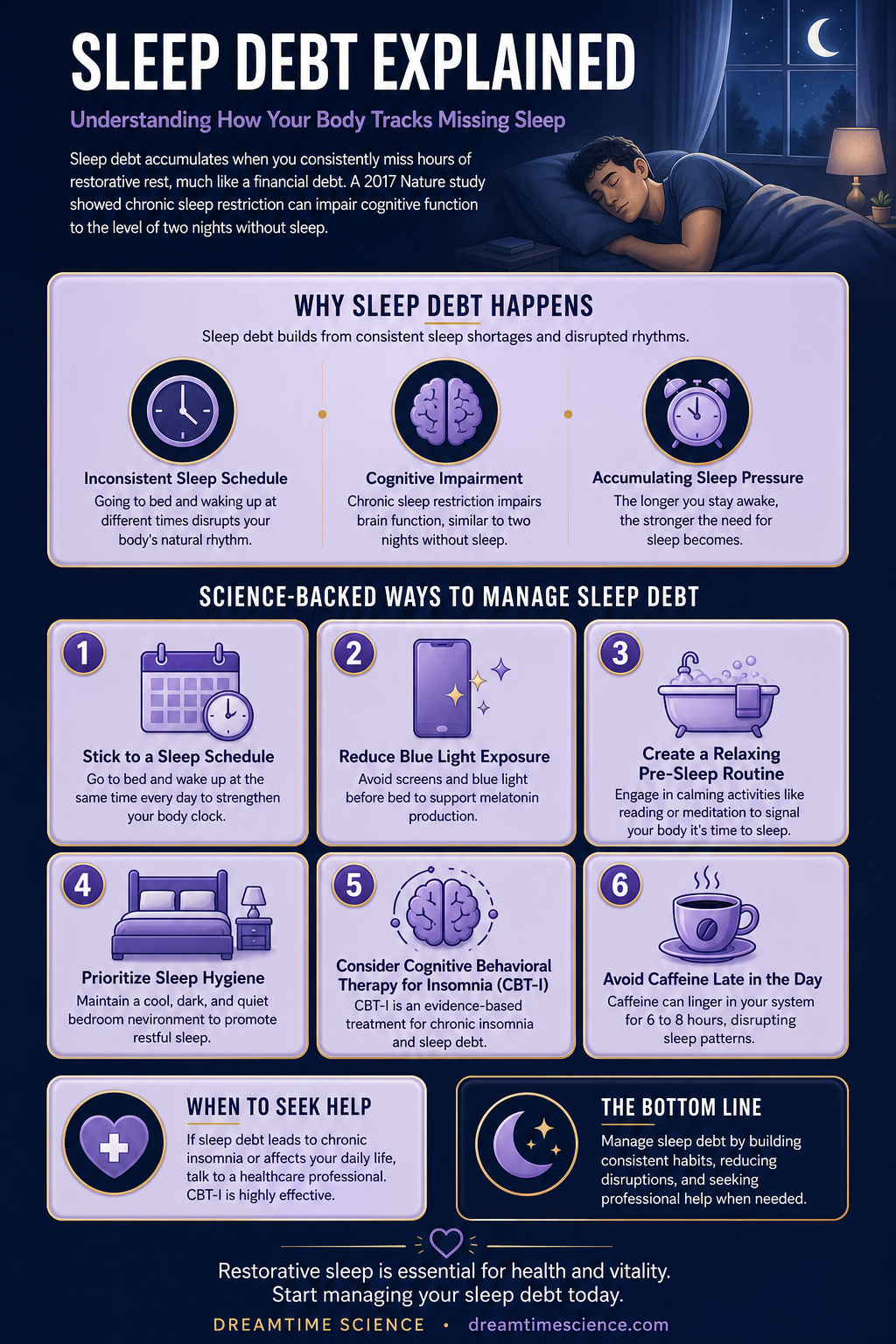
The short answer: Sleep debt accumulates when you consistently miss hours of restorative rest, much like a financial debt. A 2017 Nature study showed chronic sleep restriction can impair cognitive function to the level of two nights without sleep. While catching up on sleep can help, a 2019 Current Biology study found it doesn't fully reverse the negative impacts of chronic sleep deprivation.
In the quiet hours of the night, as you toss and turn, the concept of sleep debt might resonate with you more than ever. Sleep debt is akin to a financial debt, only instead of money, you owe your body precious hours of restorative rest. But how exactly does this debt accumulate, and why does it matter? Let's embark on a journey to uncover the science behind sleep debt and explore how it affects your mind and body.
Key takeaways
- Sleep debt represents the cumulative effect of insufficient sleep over time.
- Chronic sleep restriction can impair cognitive function similarly to total sleep deprivation.
- Sleep debt disrupts the body's natural sleep-wake cycle and circadian rhythm.
- Catching up on sleep can provide some relief, but doesn’t entirely reverse chronic sleep debt.
- Consistent sleep schedules and good sleep hygiene can help manage accumulated sleep debt.
Understanding Sleep Debt: The Basics
Sleep debt is the cumulative effect of not getting enough sleep, whether due to a few late nights or prolonged sleep deprivation. Think of it as a sleep ledger where every hour of missed sleep adds up, creating a deficit that your body will eventually demand you repay. According to a 2017 study published in the journal Nature, chronic sleep restriction can lead to significant cognitive impairments, akin to those experienced after two consecutive nights of total sleep deprivation.
How Sleep Debt Accumulates
Your body follows a natural sleep-wake cycle, orchestrated by your circadian rhythm, much like a conductor leading an orchestra through a symphony of wakefulness and rest. When you consistently skimp on sleep, you disrupt this rhythm, creating a mismatch between your internal clock and your actual sleep patterns. This disruption can lead to the accumulation of sleep debt.
The sleep pressure curve, a concept we explored in The Sleep Pressure Curve: Why You Get Tired at Specific Times, illustrates how the need for sleep builds the longer you stay awake. As sleep debt increases, this pressure becomes more pronounced, leading to overwhelming fatigue.
The Science of Sleep Debt
A fascinating 2016 study in the journal Science Translational Medicine revealed that even short-term sleep loss affects brain function. The researchers found that lack of sleep impaired the glymphatic system, which is responsible for clearing waste from the brain—a process we detailed in The Glymphatic System: How Your Brain Cleans Itself While You Sleep. This impairment can lead to cognitive decline and impacts memory and learning, as we discussed in Sleep Deprivation's Impact on Memory, Learning, and Your Immune System.
The Consequences of Sleep Debt
The repercussions of accumulating sleep debt extend beyond mere tiredness. Chronic sleep deprivation can have profound effects on both mental and physical health. A 2018 study published in the journal Sleep Health concluded that long-term sleep deprivation increases the risk of several health issues, including obesity, diabetes, and cardiovascular diseases.
Mental Health Implications
Sleep debt can exacerbate mental health conditions such as anxiety and depression. A 2019 study in The Lancet Psychiatry found a strong correlation between sleep deprivation and the onset of mood disorders. The study suggests that sleep debt can disrupt neurotransmitter levels, such as serotonin and dopamine, crucial for regulating mood—a phenomenon similar to creating instant jet lag in your brain.
Physical Health Risks
From a physiological perspective, sleep debt compromises the immune system's efficacy. Research from the University of California, San Francisco, in 2017, revealed that individuals with chronic sleep deprivation were more susceptible to infections, highlighting the importance of adequate rest for immune function.
Catching Up on Sleep: Is It Possible?
The notion of "catching up" on sleep during weekends or days off is a common practice. However, is it effective in repaying your sleep debt? The answer is both yes and no. A study published in Current Biology in 2019 found that while catching up on sleep can mitigate some short-term effects of sleep loss, it does not entirely reverse the negative impacts of chronic sleep deprivation.
Strategies for Managing Sleep Debt
So what can you do to address sleep debt effectively? Here are a few practical strategies:
-
Create a Consistent Sleep Schedule: Try to go to bed and wake up at the same time every day, even on weekends. This practice helps regulate your circadian rhythm, as detailed in Circadian Rhythms 101: How Your Body's Internal Clock Controls Sleep.
-
Prioritize Sleep Hygiene: Reduce exposure to blue light before bed, as explored in Blue Light Before Bed: Myth or Reality? What Research Actually Shows, and create a relaxing pre-sleep routine, which can include practices like progressive muscle relaxation described in Progressive Muscle Relaxation: A Neuroscience-Backed Technique for Better Sleep.
-
Seek Professional Help if Needed: If sleep debt leads to chronic insomnia, consider cognitive behavioral therapy for insomnia (CBT-I), an evidence-based treatment we highlighted in Cognitive Behavioral Therapy for Insomnia (CBT-I): Evidence-Based Sleep Fixes.
Conclusion
Sleep debt is more than just a minor inconvenience; it's a silent thief of health and vitality. By understanding how your body tracks missing sleep and taking proactive steps to manage your sleep patterns, you can restore balance and well-being. Want to experience these sleep science concepts with our soothing narration and ambient soundscapes? Check out our latest video on YouTube @dreamtimescience.
Frequently Asked Questions
What is sleep debt?
Sleep debt is the cumulative effect of not getting enough sleep over a period of time. It results from consistently sleeping less than the recommended amount, leading to a deficit that affects your physical and mental health.
Can you fully repay sleep debt by sleeping in on weekends?
While sleeping in can help alleviate some immediate effects of sleep loss, it doesn't fully compensate for chronic sleep deprivation. Regular, sufficient sleep is necessary to maintain optimal health.
How does sleep debt affect the brain?
Sleep debt impairs cognitive functions by disrupting the glymphatic system, which clears waste from the brain. It also affects mood-regulating neurotransmitters, contributing to mental health issues like depression and anxiety.
What are the long-term health risks of sleep debt?
Chronic sleep debt increases the risk of obesity, diabetes, cardiovascular diseases, and weakened immune function, making you more susceptible to infections and other health problems.
How can I prevent sleep debt?
Preventing sleep debt involves maintaining a consistent sleep schedule, practicing good sleep hygiene, and addressing any underlying sleep disorders with professional help, such as CBT-I.
Tonight's Listening
 Tonight's episodeDNA's Silent Blueprint: Uncovering Life’s Deepest Secrets
Fall Asleep to a Science Lecture
Put tonight's reading into practice — pick a gentle, softly-narrated episode and let the Professor talk you to sleep.
Tonight's episodeDNA's Silent Blueprint: Uncovering Life’s Deepest Secrets
Related articles

How Sleep Works
The Window of Sleep: Understanding Your Body's Sleep Gates
Your sleep window is a period when your body's natural rhythms align, facilitating sleep, and is influenced by factors like your circadian rhythm and sleep pressure.…
Dreams & Nightmares
REM Sleep Explained: Why This Stage Matters Most
REM sleep is the brain's nightly maintenance cycle for emotional processing and memory consolidation. During REM, your brain is nearly as active as when awake,…

Bedroom & Bedtime Habits
The Role of Darkness: Why Light Exposure Matters for Sleep
Darkness plays a crucial role in sleep by signaling the brain to release melatonin, the hormone that promotes relaxation and initiates sleep. Exposure to light,…