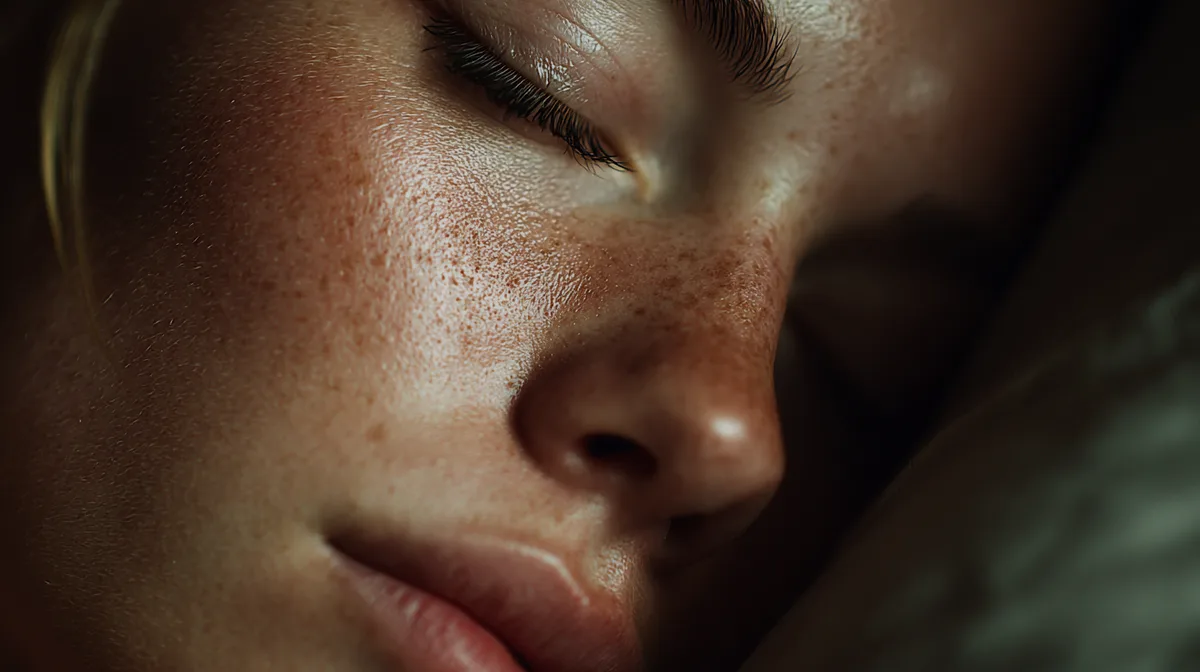
Your Bedtime Routine
The hour before sleep is the most important hour for sleep quality. What you do in this window either primes your brain for rest or pushes it further into alertness.
- Dim your lights 60-90 minutes before bed. Bright overhead lighting suppresses melatonin. Switch to warm, low lamps or candles. Your suprachiasmatic nucleus responds to light intensity, and dimming signals your brain that night has arrived.
- Stop screens 30-60 minutes before sleep. It is not just the blue light. Screens deliver stimulating content that activates your cortex. If you must use a device, enable a warm filter and avoid social media, news, or anything that triggers emotional arousal.
- Keep your routine consistent. Go to bed and wake up at the same time every day, including weekends. Your circadian clock thrives on regularity. Even a 90-minute shift on weekends can create "social jet lag" that disrupts your Monday sleep.
- Try a "wind-down" ritual. Read fiction, listen to a Dreamtime Science episode, do gentle stretching, or practise progressive muscle relaxation. Repetition trains your brain to associate these activities with sleep onset.
Dive deeper: The Perfect Bedtime Routine According to Sleep Scientists | Sleep Hygiene 101: Building a Better Bedtime Routine From Scratch | Revenge Bedtime Procrastination: Why You Delay Sleep on Purpose

Your Sleep Environment
Your bedroom should be a cave: cool, dark, and quiet. Small environmental changes can produce measurable improvements in sleep quality.
- Temperature: 15-19°C (60-67°F). Your core body temperature needs to drop by about 1°C to initiate sleep. A cool room accelerates this process. If your feet are cold, wear socks. Warm extremities help dilate blood vessels and release core heat faster.
- Darkness: as close to total as possible. Even dim light through closed eyelids can suppress melatonin. Use blackout curtains or a quality sleep mask. Cover LED standby lights on devices.
- Sound: steady or silent. Unpredictable noise (traffic, neighbours) fragments sleep. A white noise machine or fan creates a consistent sound floor that masks disruptions. Natural sounds like rain or gentle wind also promote parasympathetic nervous system activity.
- Reserve your bed for sleep. Working, scrolling, or watching television in bed teaches your brain that the bed is a place for wakefulness. Keep it exclusively for sleep and intimacy.
Dive deeper: Temperature, Darkness, and Sound: The Ideal Sleep Environment | White Noise and Sleep: Does Background Sound Help or Hurt? | Pink Noise vs White Noise: Which Sounds Help You Sleep Deeper | Bedroom Air Quality: How Humidity, CO2 and Plants Affect Sleep

During the Day
What you do in daylight hours shapes how well you sleep at night. Sleep is a 24-hour process.
- Get bright light within 30 minutes of waking. Morning sunlight anchors your circadian rhythm, boosts cortisol at the right time, and sets a timer for melatonin release roughly 14-16 hours later. Even 10 minutes of outdoor light helps. Overcast sky is still far brighter than indoor lighting.
- Caffeine cutoff: 8-10 hours before bed. Caffeine has a half-life of about 5 hours. A 2pm coffee still has 50% of its caffeine in your bloodstream at 7pm. Even if you can fall asleep after late caffeine, research shows it reduces deep sleep quality. Use our Caffeine Calculator to check your clearance time.
- Exercise, but not too late. Regular physical activity improves sleep quality significantly. However, vigorous exercise within 2-3 hours of bedtime raises your core temperature and adrenaline, making it harder to fall asleep. Morning or afternoon exercise is ideal.
- Limit naps to 20 minutes before 2pm. Long or late naps reduce your sleep pressure (the adenosine buildup that makes you feel sleepy), making it harder to fall asleep at your regular bedtime.
- Avoid alcohol within 3 hours of bed. Alcohol is a sedative, not a sleep aid. It may help you lose consciousness faster, but it fragments sleep architecture, suppresses REM sleep, and causes middle-of-the-night awakenings as your liver metabolises it.
Dive deeper: Circadian Rhythms 101 | Blue Light Before Bed | Why Naps Backfire | Caffeine Half-Life: How Long Caffeine Actually Stays in Your System | Caffeine Sensitivity: Why Some People Are More Affected Than Others | How to Use the Nap Calculator: A Complete Guide | Microsleep: The Split-Second Naps You Don't Know You're Taking

If You Can't Fall Asleep
Lying in bed awake is counterproductive. The longer you stay there frustrated, the more your brain associates the bed with wakefulness.
- The 20-minute rule. If you have not fallen asleep within roughly 20 minutes (do not check the clock, estimate), get up. Go to another room, do something quiet and boring in dim light, and return only when you feel sleepy. This is a core principle of CBT-I.
- Try the cognitive shuffle. Pick a random letter and think of words starting with that letter, visualising each one. Apple, accordion, astronaut, anchor. This occupies your brain just enough to prevent anxious rumination, without being stimulating enough to keep you awake.
- 4-7-8 breathing. Inhale through your nose for 4 seconds, hold for 7, exhale slowly through your mouth for 8. This activates your parasympathetic nervous system and reduces heart rate. Three to four cycles is usually enough to feel noticeably calmer.
- Do not watch the clock. Clock-watching fuels sleep anxiety. Turn your clock away from view. Calculating how many hours of sleep you will get if you fall asleep "right now" creates the exact kind of arousal that prevents sleep.
- Body scan meditation. Starting from your toes, slowly bring attention to each part of your body, noticing tension and letting it release. By the time you reach your head, most of the physical tension driving wakefulness has softened.
Dive deeper: 7 Science-Backed Ways to Beat Insomnia Tonight | Understanding the Insomnia Cycle | Should You Get Out of Bed When You Can't Sleep? The 20-Minute Rule | Menopause and Sleep: Night Sweats, Insomnia and What Helps | Orthosomnia: When Chasing Perfect Sleep Scores Keeps You Awake

Understanding Your Sleep
Knowing how sleep works helps you stop fighting it and start working with it.
- Sleep runs in 90-minute cycles. Each cycle moves through light sleep, deep sleep, and REM sleep. Waking at the end of a cycle (rather than in the middle of deep sleep) is what makes you feel refreshed. Use our Sleep Cycle Calculator to find your optimal times.
- Deep sleep is front-loaded. Your longest stretches of restorative deep sleep happen in the first half of the night. This is when your body repairs tissue, strengthens immunity, and your glymphatic system clears metabolic waste from your brain.
- REM sleep increases toward morning. The second half of the night is rich in REM sleep, when your brain processes emotions and consolidates memories. Cutting your sleep short by even an hour disproportionately removes REM time.
- Your chronotype matters. Not everyone is built for a 10pm-6am schedule. Your natural tendency toward morning or evening is largely genetic. Fighting your chronotype creates chronic misalignment. Take our Chronotype Quiz to discover yours.
Dive deeper: Sleep Cycles Explained | REM Sleep Explained | The Sleep Pressure Curve | The Sleep-Dream Connection: How Different Sleep Stages Produce Different Dreams | Sleep and Dementia Risk: What Deep Sleep Does for Your Brain